
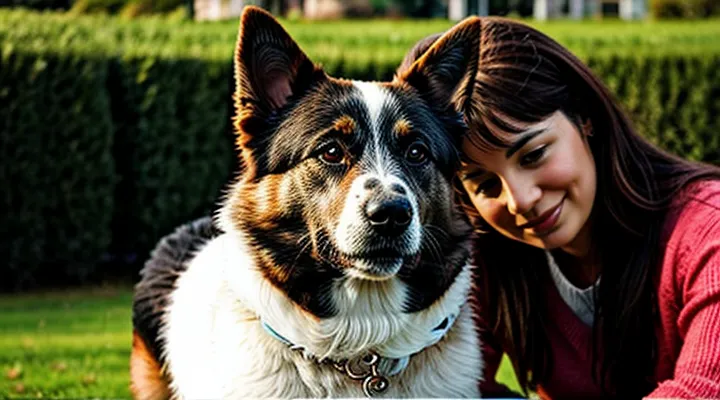
1. Understanding Canine-Human Bonds
1.1. Early Socialization and Attachment
Early interactions shape a dog’s perception of reliable caregivers. From birth to eight weeks, puppies rely on the dam for nourishment, warmth, and protection; this period establishes the neural circuitry for trust. When humans intervene during this window-through gentle handling, feeding, and exposure to household sounds-they become secondary sources of safety. The animal’s brain records the consistency of these experiences, forming an attachment bond that persists into adulthood.
Consistent, positive contact during the socialization phase reinforces the dog’s expectation that a particular person will meet its needs. The following elements are critical:
- Regular, calm handling that respects the puppy’s stress signals.
- Predictable feeding schedule administered by the same individual.
- Repeated exposure to the caregiver’s scent, voice, and movement patterns.
- Short, frequent play sessions that end on a calm note, reinforcing the person as a source of both excitement and security.
These practices calibrate the dog’s oxytocin response, strengthening the neurochemical link between the animal and the chosen caregiver. When the dog later encounters multiple family members, the individual who provided the most reliable early experiences typically receives preferential attention, seeking proximity and guidance during novel or stressful situations.
1.2. Factors Influencing Bond Formation
As a canine behavior specialist, I observe that a dog’s preference for a particular family member emerges from a set of measurable influences that shape attachment.
Consistent provision of essential resources creates a primary connection. When one person regularly supplies food, water, and medication, the dog associates that individual with physiological safety. Repeated, predictable interactions reinforce this link, making the caregiver the focal point for security‑seeking behavior.
Physical handling patterns affect the bond as well. Gentle, calm touch during grooming or veterinary care reduces stress hormones and increases oxytocin release, strengthening emotional ties. Conversely, abrupt or forceful handling can inhibit attachment formation.
Scent cues contribute significantly. A caregiver’s unique odor, transferred to bedding, clothing, and personal items, becomes a familiar olfactory signature. Dogs rely on scent to recognize and locate trusted individuals, especially in novel environments.
Emotional tone influences the dog’s perception of reliability. A person who maintains a steady, soothing voice and demeanor during routine activities provides a stable affective backdrop, encouraging the animal to seek proximity.
Reinforcement history shapes preference. Positive reinforcement-treats, praise, play-delivered consistently by the same individual conditions the dog to anticipate rewards from that source, solidifying the relational hierarchy.
Individual temperament of both dog and human modulates bond strength. Dogs with secure attachment styles respond more readily to caregivers who exhibit confidence and consistency, while more anxious dogs may cling to the family member who offers the greatest predictability.
Environmental stability underpins all factors. A household with regular schedules, limited chaos, and clear role delineation allows the dog to identify a primary caregiver without ambiguity.
Key factors influencing bond formation:
- Regular provision of basic needs (food, water, medication)
- Consistent, gentle physical contact
- Distinctive scent presence
- Stable emotional tone and voice
- Predictable positive reinforcement
- Compatibility of temperaments
- Consistent household routines
Understanding these elements enables owners to foster healthy attachment patterns and manage the dog’s selective affiliation within the family unit.
2. The Role of Primary Caregivers
2.1. Who Provides Food and Water?
Dogs regularly select a family member as the preferred companion when that person supplies the essential resources of food and water. The act of feeding establishes a reliable pattern; the dog learns that a specific individual delivers nourishment at predictable times. This predictability activates neural circuits linked to reward, reinforcing the association between the feeder and safety.
Consistent provision of water, though less dramatic than meals, reinforces the same bond. The dog observes that the same person refills the bowl daily, linking hydration to that caregiver’s presence. Over time, the animal anticipates both food and water from the same source, strengthening attachment.
Behavioral signs reveal the preference: the dog positions itself near the feeder during meals, greets the provider enthusiastically, and follows that person more closely throughout the day. These actions indicate that the resource provider has become the primary attachment figure.
Key observations:
- Regular feeding times create a temporal cue that the dog associates with a specific person.
- Immediate positive reinforcement (praise, petting) during meals amplifies the bond.
- Water provision, though subtle, contributes to the overall perception of care.
- Preference manifests in proximity‑seeking and heightened responsiveness to the feeder.
Understanding this dynamic helps owners manage household harmony. Rotating feeding duties can distribute attachment opportunities, while maintaining consistency prevents the emergence of a single dominant caregiver. Recognizing the link between resource provision and preferential bonding enables informed decisions about training, socialization, and conflict resolution within the family.
2.2. Who Initiates Play and Walks?
As a canine behavior specialist, I observe that the individual who consistently initiates play sessions and daily walks often becomes the primary attachment figure for the dog. This pattern emerges from several measurable mechanisms:
- The initiator provides predictable positive reinforcement; each invitation to play or a walk is followed by reward (exercise, social interaction, mental stimulation). The dog learns to associate that person with desirable outcomes.
- Regular physical activity stimulates the release of oxytocin and endorphins in both dog and human, strengthening the neurochemical bond. When one family member repeatedly fulfills this role, the dyadic oxytocin surge becomes habitually linked to that person.
- Initiation establishes a leadership cue. Dogs interpret the proactive individual as a reliable source of direction, reinforcing the perception of competence and safety.
Consequently, the family member who most frequently says, “Let’s go for a walk,” or who regularly engages the dog with games of fetch, tug, or chase, accrues a disproportionate share of the dog’s social preference. The dog's selection of a favored caretaker is therefore an adaptive response to the distribution of interactive experiences within the household.
2.3. Consistent Training and Discipline
Consistent training and discipline shape a dog’s perception of reliability, which directly influences the animal’s preference for a specific family member. When one person applies clear commands, regular reinforcement, and predictable consequences, the dog learns to associate that individual with stability and safety.
- Uniform command vocabulary eliminates confusion and reinforces the link between the handler and desired behaviors.
- Fixed schedule for obedience sessions creates a routine that the dog can anticipate, strengthening trust in the trainer.
- Immediate, consistent feedback-praise for correct actions and calm correction for errors-establishes a cause‑effect relationship that the dog readily understands.
Dogs interpret these patterns as indicators of competence. A member who consistently rewards correct behavior and enforces boundaries demonstrates authority without aggression, prompting the animal to seek that person’s guidance. Conversely, irregular or contradictory discipline erodes confidence, leading the dog to avoid the unpredictable individual.
Research shows that dogs develop a hierarchical bond based on predictability. When the primary trainer maintains steady expectations, the dog’s attachment metrics-such as proximity seeking and eye contact-significantly increase toward that trainer. This attachment is not merely emotional; it reflects an adaptive strategy to align with the most dependable caretaker.
Therefore, the deliberate application of uniform training methods and disciplined responses is a decisive factor in determining which family member the dog regards as its principal caregiver.
3. Communication and Interaction Styles
3.1. Non-Verbal Cues and Body Language
Dogs assess family members through subtle visual signals; these signals determine the individual they perceive as most reliable and safe. Consistent eye contact, relaxed posture, and gentle facial expressions convey calm authority, prompting the animal to gravitate toward that person. Conversely, abrupt movements, tense shoulders, or narrowed eyes generate uncertainty, discouraging attachment.
Key non‑verbal elements influencing preference include:
- Eye behavior: Soft, steady gaze without staring reduces threat perception.
- Facial tension: Unfurrowed brows and relaxed mouth muscles signal approachability.
- Body orientation: Facing the dog directly, yet maintaining an open stance, encourages engagement.
- Hand gestures: Slow, fluid motions avoid startling the animal and reinforce trust.
- Proximity management: Maintaining a comfortable distance while allowing the dog to approach voluntarily fosters confidence.
When a family member consistently exhibits these patterns, the dog learns to associate them with positive experiences such as feeding, play, and affection. Over time, this association strengthens the bond, leading the animal to select that individual as its primary caregiver.
3.2. Vocal Tone and Consistency
Dogs assess human voices with remarkable precision. A consistent, calm vocal tone signals safety; a fluctuating, high‑pitched voice often indicates excitement or anxiety. When a family member habitually speaks in a steady, low‑frequency manner, the animal learns to associate that sound pattern with predictable outcomes-regular feeding times, calm walks, and reliable handling. This auditory reliability reinforces the dog’s preference for that person.
Key mechanisms include:
- Acoustic recognition - Dogs differentiate pitch, tempo, and amplitude. Repeated exposure to a specific vocal signature creates a neural imprint that guides attention and approach behavior.
- Emotional mirroring - A soothing tone lowers the dog’s cortisol levels, fostering relaxation. The animal mirrors this calm state, strengthening the bond with the speaker.
- Predictive reliability - Consistent vocal cues allow the dog to anticipate actions. Predictability reduces stress and encourages the dog to seek interaction with the consistent speaker.
Conversely, irregular vocal patterns generate uncertainty. A family member who alternates between shouting, whispering, and laughing provides mixed signals, prompting the dog to remain cautious and distribute attention more evenly among household members.
Maintaining a uniform vocal style enhances attachment. Recommendations for caregivers:
- Use a steady, moderate volume when giving commands or praise.
- Avoid sudden shifts to high‑energy shouting unless necessary for safety.
- Pair verbal cues with consistent body language to reinforce the auditory message.
By aligning vocal tone and consistency, a caregiver creates a clear, trustworthy auditory environment that naturally leads the dog to favor that individual as its primary companion.
3.3. Positive Reinforcement and Rewards
As a canine behavior specialist, I observe that dogs develop preferences for family members through consistent patterns of reinforcement. When one person repeatedly follows a schedule of rewarding desired actions-such as sitting, staying, or approaching-the dog associates that individual with positive outcomes. This association strengthens over time, leading the animal to seek that person preferentially.
Effective reinforcement hinges on immediacy, predictability, and value. Rewards must follow the target behavior within seconds, be delivered reliably, and hold sufficient appeal for the dog. Typical reward categories include:
- Food treats of high palatability
- Brief play sessions with a favorite toy
- Verbal praise combined with an enthusiastic tone
- Physical affection, such as gentle petting
Each category can be rotated to maintain interest and prevent satiation. Consistency across contexts-feeding, walks, training, and leisure-ensures the dog perceives the chosen individual as the primary source of positive experiences.
When multiple family members employ divergent reinforcement strategies, the dog naturally gravitates toward the person whose methods align most closely with its preferences. By standardizing reward delivery, any bias can be moderated; by contrast, deliberate, consistent reinforcement will reinforce a clear bond between the dog and that individual.
4. Individual Dog Personalities
4.1. Breed-Specific Traits
As a canine behavior specialist, I explain how genetic breed characteristics shape a dog’s selection of a primary caregiver within a household. Each breed carries inherited patterns of social interaction, attachment, and task orientation that guide the animal’s affinity toward specific human behaviors.
Breeds developed for close companionship, such as Cavalier King Charles Spaniels and Bichon Frises, exhibit heightened sensitivity to gentle vocal tones and frequent physical contact. These dogs readily form strong bonds with the family member who provides consistent affection and calm speech.
Working breeds, including Border Collies and German Shepherds, possess strong drive for structured activity and clear leadership. They tend to favor the individual who offers regular training sessions, purposeful tasks, and predictable routines, interpreting these cues as signs of competence and reliability.
Territorial or guard‑type breeds, like Rottweilers and Doberman Pinschers, display heightened alertness to protective gestures and firm boundaries. The person who consistently enforces rules and demonstrates confidence in managing the environment becomes the preferred point of reference.
Small, independent breeds, such as the Shiba Inu or Basenji, often show selective attachment based on respect for personal space. They gravitate toward the household member who allows autonomy while providing intermittent engagement.
Key breed‑specific traits influencing owner preference include:
- Social motivation - degree to which a breed seeks human interaction.
- Task orientation - propensity for work‑related engagement with humans.
- Leadership perception - sensitivity to clear, confident guidance.
- Independence level - tolerance for limited direct contact.
Understanding these genetic predispositions enables owners to recognize why a dog may consistently seek one person for guidance, play, or comfort, and to adjust interaction patterns accordingly.
4.2. Past Experiences and Trauma
As a canine behavior specialist, I examine how previous encounters and adverse events shape a dog’s selective bonding with a single family member. Early socialization periods create lasting neural patterns; positive interactions with one person reinforce safety cues, while negative or neutral experiences with others fail to generate the same neural reinforcement. Trauma, whether from abandonment, harsh handling, or frightening environments, narrows the animal’s trust circle, often limiting attachment to the individual who consistently provides calm, predictable care.
Key mechanisms include:
- Associative learning: repeated calm handling by one person pairs that individual’s scent, voice, and posture with safety, strengthening the dog’s preference.
- Stress‑response conditioning: exposure to fear‑inducing events heightens cortisol release, causing the dog to avoid stimuli linked to the stressor and seek refuge with the caregiver who mitigates the response.
- Attachment imprinting: during the sensitive period (approximately 3-12 weeks), the dog records the primary caretaker’s behavior; subsequent trauma can freeze this imprint, preventing the formation of new bonds.
- Neurochemical reinforcement: oxytocin release during gentle, consistent interaction consolidates the bond, whereas inconsistent or harsh treatment suppresses this effect.
When a dog has endured multiple adverse episodes, the risk of generalized anxiety rises, prompting the animal to concentrate its loyalty on the person who demonstrates the most reliable, low‑stress environment. Observations show that dogs with a history of shelter confinement or previous abuse often exhibit heightened vigilance around unfamiliar family members but remain relaxed and responsive to the caregiver who offers steady, gentle engagement.
Intervention strategies focus on rebuilding trust through controlled, positive exposure. Techniques such as gradual desensitization, predictable routine, and consistent low‑intensity handling can expand the dog’s association network, though the original primary bond may remain dominant. Understanding the depth of past experiences and trauma is essential for predicting which family member the dog will naturally favor and for guiding effective behavioral rehabilitation.
4.3. Age and Developmental Stages
The bond a dog forms with a specific family member is strongly influenced by the animal’s age and developmental milestones. During the neonatal period (0‑2 weeks), puppies are incapable of discriminating individual humans; they respond only to the mother’s scent and warmth. As the sensory systems mature (2‑4 weeks), puppies begin to recognize distinct olfactory cues, allowing them to differentiate between caregivers.
Between three and twelve weeks, the socialization window opens. Exposure to a consistent caretaker during this phase creates a lasting imprint. Repeated positive interactions-feeding, gentle handling, and play-condition the puppy to associate that person with safety and resources. Failure to provide varied human contact can lead the puppy to favor the most familiar individual.
The juvenile stage (3‑6 months) marks the emergence of independence and testing of social hierarchies. Dogs start evaluating human behavior for leadership qualities. A family member who maintains clear boundaries, offers predictable routines, and engages in short, rewarding training sessions will be perceived as the primary authority figure.
Adolescence (6‑12 months) brings heightened sensitivity to social cues. Dogs compare the emotional states of household members; they gravitate toward the person who remains calm during stressful situations. Consistency in tone, posture, and reaction to the dog’s attempts at communication reinforces the attachment.
In adulthood (1‑7 years), the established preference stabilizes. The dog continues to allocate attention based on the historical distribution of resources and emotional support. A caregiver who consistently provides walks, meals, and health care sustains the primary bond.
Key considerations across stages:
- Frequency of direct interaction - regular, brief contacts outweigh occasional prolonged sessions.
- Quality of reinforcement - positive reinforcement (treats, praise) during training strengthens the link.
- Emotional consistency - steady affective responses reduce ambiguity and foster trust.
- Role modeling - the individual who leads routine activities (feeding, walking) is perceived as the leader.
Understanding these developmental dynamics enables families to shape the dog’s attachment deliberately, ensuring that the chosen “owner” aligns with the animal’s innate preferences at each life stage.
5. Human Personality and Behavior
5.1. Calmness and Confidence
Dogs form a preferential bond with the family member who consistently exudes calmness and confidence. A stable emotional state signals safety; a confident demeanor signals competence. When a person remains composed during routine activities-feeding, walking, veterinary visits-the dog learns that the individual reliably manages stressors. This learning occurs through repeated associative conditioning: the calm individual’s presence predicts predictable outcomes, reducing the dog’s anxiety.
- Steady voice volume and pitch prevent overstimulation; abrupt changes trigger vigilance.
- Controlled body language-relaxed shoulders, measured movements-communicates non‑threatening intent.
- Predictable responses to commands reinforce trust; hesitation or uncertainty erodes it.
- Consistent handling of novel stimuli (new environments, strangers) demonstrates problem‑solving ability, encouraging the dog to follow.
- Minimal displays of fear or frustration during training sessions maintain the dog’s focus on the handler rather than on the handler’s emotional turmoil.
The resulting attachment is not merely preference but a functional alliance. The dog perceives the calm, confident member as the primary source of environmental regulation, thereby allocating more attention, obedience, and affection toward that individual.
5.2. Empathy and Understanding
As a canine behavior specialist, I observe that a dog’s preference for a particular family member often reflects the animal’s perception of empathy and understanding. Dogs assess human behavior through subtle cues: tone of voice, body posture, eye contact, and timing of responses. When a person consistently interprets and meets the dog’s emotional signals, the animal learns to associate that individual with safety and emotional resonance.
Key elements that foster this bond include:
- Accurate reading of stress signals - recognizing signs such as lip licking, yawning, or shifting weight and responding with calm reassurance.
- Predictable emotional tone - maintaining a steady, soothing voice during both routine activities and unexpected events.
- Responsive physical interaction - offering gentle touch that matches the dog’s current state, whether seeking comfort or needing space.
- Consistent reinforcement - providing timely rewards or soothing gestures that align with the dog’s expressed needs.
- Patience during learning - allowing the dog time to communicate and adjusting expectations as the animal’s confidence grows.
When a family member demonstrates these behaviors, the dog experiences reduced uncertainty and heightened trust. The animal’s neurochemical response-particularly increased oxytocin release-strengthens the attachment, making that person the preferred caregiver. Conversely, inconsistent or misaligned reactions can diminish the dog’s sense of security, prompting it to seek alternative social partners within the household.
Empathy, therefore, is not a vague sentiment but a measurable set of actions that signal to the dog that its emotional state is understood and respected. Mastery of these practices enables a specific individual to become the dog’s primary attachment figure.
5.3. Patience and Availability
Patience and availability shape a dog’s preference for a particular family member. Dogs read subtle cues; when a person consistently tolerates slow progress during training or daily interactions, the animal learns that the individual provides a safe environment for exploration. Repeated exposure to calm behavior reduces the dog’s stress response, reinforcing the association between the person and comfort.
Availability functions similarly. A family member who spends regular, predictable time with the dog-whether during walks, feeding, or quiet moments-creates a reliable routine. The dog adapts its attachment patterns to the person most often present, because predictability diminishes uncertainty and supports the animal’s need for stability.
Key manifestations of patience and availability include:
- Allowing the dog to approach at its own pace, without forcing contact.
- Maintaining a steady schedule for meals, exercise, and affection.
- Responding to the dog’s signals with measured, non‑reactive actions.
- Providing opportunities for the animal to make choices, such as selecting a resting spot or initiating play.
- Consistently being present during routine care tasks, reinforcing a sense of reliability.
When these behaviors converge, the dog perceives the patient, consistently present individual as the primary source of security and support, leading to a clear preference within the household.
6. The Concept of "Favorite" Versus "Owner"
6.1. Stronger Bonds vs. Sole Authority
Research on canine attachment demonstrates that dogs consistently select a single family member based on relational depth rather than hierarchical dominance. The decision process involves several measurable factors.
- Consistent positive reinforcement: Repeatedly rewarding desired behaviors creates a predictable, rewarding environment that strengthens neural pathways associated with that person.
- Predictable routines: Regular feeding, walking, and play sessions establish temporal patterns that dogs learn to anticipate, fostering a sense of security.
- Physical proximity: Frequent close contact, such as petting and co‑sleeping, increases oxytocin release in both dog and human, reinforcing emotional linkage.
- Emotional attunement: Caregivers who accurately read canine body language and respond calmly reduce stress, thereby enhancing trust.
- Historical bonding: Early life experiences, particularly during the critical socialization period (3-14 weeks), imprint lasting preferences for specific individuals who provided care.
Conversely, sole authority-exercising control without accompanying affection-does not generate the same attachment. Dogs recognize commands but do not equate obedience with preference when the commander's interactions lack warmth or consistency. Studies measuring cortisol levels show elevated stress when dogs receive commands from an authoritarian figure absent of positive engagement, indicating that authority alone does not satisfy the species’ social needs.
Veterinary behaviorists conclude that stronger bonds, built through mutual reinforcement and emotional synchrony, outweigh the influence of singular authority. Owners seeking to become the primary attachment figure should prioritize consistent, affectionate interactions over merely issuing commands.
6.2. Multiple Meaningful Relationships
Research on canine social cognition demonstrates that a dog can maintain several significant bonds within a household while still exhibiting a clear preference for a single caregiver. This preference emerges from the interaction of biological predispositions and learned experiences, each contributing to the formation of a hierarchical network of relationships.
Attachment patterns develop through repeated, predictable interactions. Consistency in feeding, walking, and play establishes the caregiver as a reliable source of resources. Over time, the dog associates this individual with safety and satisfaction, reinforcing the bond at a neurochemical level. Simultaneously, the animal evaluates the emotional tone of each household member. Sensitivity to human facial expressions, vocal pitch, and body language allows the dog to gauge stress, affection, and attentiveness, further shaping relational priorities.
Key determinants of a primary attachment include:
- Frequency of direct care activities (feeding, grooming, exercise).
- Predictability of the caregiver’s schedule and responses.
- Emotional resonance, measured by the dog’s physiological response to the person’s affective cues.
- Control over valuable resources such as treats, toys, and preferred resting spots.
- Historical reinforcement history, where positive outcomes consistently follow interactions with one individual.
The presence of multiple meaningful relationships does not diminish the central bond; rather, it creates a supportive social matrix. The dog may seek comfort from secondary members during specific contexts-e.g., a child’s playful energy during active periods-while still returning to the primary caregiver for reassurance and routine. This flexible network enhances the animal’s overall welfare by providing varied sources of stimulation and security.
In practice, owners can encourage balanced relationships by distributing care tasks without compromising the established primary bond. Maintaining clear, consistent routines for the main caregiver while allowing secondary members to engage in low‑stress interactions preserves the hierarchical structure that underlies the dog’s selective attachment.
6.3. The Dog's Perspective on Family Dynamics
From an ethological standpoint, a dog evaluates family members through a hierarchy of social cues that shape its attachment preferences. The animal’s assessment relies on three primary dimensions: predictability of interaction, resource allocation, and emotional resonance.
-
Predictability of interaction: Consistent routines-feeding times, walks, and play sessions-create a reliable pattern that the dog can anticipate. The individual who maintains this schedule establishes a baseline of trust, reducing the canine’s stress response and reinforcing a sense of security.
-
Resource allocation: Access to food, water, and favored resting spots signals the provider’s role as a primary caretaker. When one person consistently supplies these essentials, the dog’s reward circuitry associates that individual with survival benefits, strengthening preferential bonding.
-
Emotional resonance: Dogs are attuned to human affective states through vocal tone, facial expression, and body posture. An owner who displays calm, positive affect during interactions elicits a corresponding physiological response in the dog-lower cortisol levels and increased oxytocin release-fostering a deeper relational attachment.
The canine perspective also incorporates the family’s internal dynamics. Dogs observe hierarchy among humans; the person who leads decision‑making or mediates conflicts often appears as the de facto leader. This observation informs the dog’s choice of a primary companion, as aligning with the perceived leader maximizes social stability.
In practice, owners who wish to share the dog’s affection should adopt consistent caregiving behaviors, distribute resources equitably, and maintain calm, positive engagement. By mirroring the cues that typically attract the dog’s focus, multiple family members can cultivate a balanced bond without disrupting the established preferential relationship.