
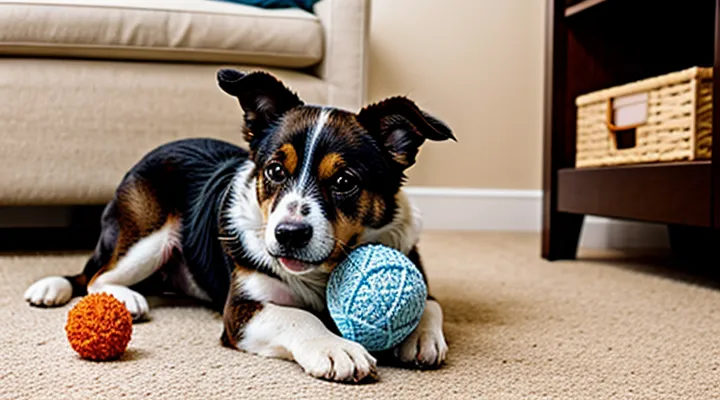
Instinctual Behaviors
1. Hoarding and Resource Guarding
Dogs often conceal their play objects as a manifestation of hoarding and resource guarding. This behavior originates from an instinct to protect valuable items that ensure survival or comfort. When a dog perceives a toy as a limited resource, it may store it in a hidden location to reduce the risk of theft by other animals or humans. The act of hiding serves two primary functions: preserving the item for future use and signaling ownership.
Key mechanisms driving this conduct include:
- Perceived scarcity - Repeated exposure to competition for toys heightens vigilance and prompts concealment.
- Past reinforcement - Successful retrieval of hidden items reinforces the strategy, making it more likely to recur.
- Anxiety reduction - Controlling access to a prized object can alleviate stress associated with unpredictable loss.
Observations of canine behavior reveal that the intensity of hoarding correlates with the animal’s overall temperament and the environment’s stability. Dogs raised in households with inconsistent playtime or frequent removal of toys are more prone to develop strong guarding tendencies. Conversely, consistent access and positive reinforcement for sharing can diminish the need to hide objects.
From a practical standpoint, mitigating excessive hoarding involves:
- Providing multiple identical toys to dilute competition.
- Establishing clear boundaries for play, including regular, supervised sessions.
- Rewarding relinquishment of toys on command, thereby weakening the association between possession and security.
Understanding these dynamics enables owners to address the root causes of concealment, fostering healthier interaction patterns and reducing the likelihood of resource-guarding conflicts.
2. Prey Drive and Stashing
As a canine behavior specialist, I observe that a dog’s instinct to capture moving objects triggers a strong prey drive. When the animal successfully seizes a toy, the brain releases dopamine, reinforcing the action as rewarding. This neurological response encourages the dog to protect the item, treating it as valuable prey that must be secured.
The natural response to a perceived catch includes stashing. Dogs instinctively hide resources to reduce competition and increase future access. Stashing behavior manifests as placing toys under furniture, behind cushions, or in secluded corners. This action mirrors wild canids that cache food to safeguard it from scavengers.
Key mechanisms behind this behavior:
- Prey drive activation by rapid, erratic movement of the toy.
- Dopaminergic reinforcement that strengthens the capture‑and‑store loop.
- Evolutionary pressure to hide resources to avoid theft.
- Spatial memory that enables the dog to retrieve the hidden item later.
Understanding these processes clarifies why a dog may deliberately conceal its play objects from owners.
3. Security and Safety
As a canine behavior specialist, I explain the security and safety motivations behind a dog’s tendency to conceal its play objects. Dogs treat toys as valuable resources. By stashing them, they reduce the likelihood of theft by other animals or household members, preserving the items for future use. The act also prevents accidental loss; hidden toys are less likely to roll under furniture where they can be stepped on or cause tripping hazards.
From a safety perspective, concealment protects the dog from ingestion of broken or contaminated pieces. When a toy is damaged, a dog that stores it away can avoid chewing on sharp fragments that could cause oral injuries. Additionally, hiding toys in designated spots limits exposure to environmental contaminants such as chemicals on the floor or dirt that could lead to infection.
Owners benefit from understanding this behavior. Recognizing that a dog’s storage habits are driven by resource protection helps prevent accidental entrapment of the animal in small spaces. Providing secure, easily accessible containers satisfies the dog’s need for security while maintaining a safe environment. Regular inspection of toys for wear and damage, combined with a controlled storage system, minimizes health risks and reduces the chance that a dog will hide items in unsafe locations.
Key actions for owners:
- Supply a durable, closed container for toy storage.
- Rotate toys to maintain interest and reduce hoarding urges.
- Inspect each toy for cracks or fraying before allowing play.
- Keep storage areas free of gaps where a dog could become trapped.
Behavioral Explanations
1. Seeking Attention
Dogs frequently conceal their toys as a deliberate strategy to draw the owner’s focus. By placing an object out of immediate reach, the animal creates a scenario that prompts the human to search, retrieve, or inquire about the missing item. This interaction satisfies the dog’s need for engagement and reinforces the bond through a shared activity.
Key mechanisms behind this behavior include:
- Signal of readiness for play - the hidden toy acts as a visual cue that the dog is prepared to interact, prompting the owner to initiate a game.
- Solicitation of attention - the act of hiding triggers curiosity, leading the human to respond verbally or physically, which the dog interprets as positive reinforcement.
- Control of interaction timing - by managing when the toy reappears, the dog can dictate the pace of play, ensuring the owner’s involvement aligns with its own energy level.
Understanding this pattern allows owners to respond constructively: acknowledge the hidden item, engage promptly, and reinforce the desired behavior with praise or a brief play session. Consistent, measured responses reduce the need for the dog to resort to concealment as the primary method of obtaining attention.
2. Playing a Game
As a canine behavior specialist, I observe that a dog’s decision to conceal its toys frequently reflects a structured form of play. The act of hiding transforms a simple object into a resource that must be sought, retrieved, and defended, thereby enriching the animal’s mental and physical engagement.
The game‑like aspects serve several functions:
- Resource‑guarding practice - by stashing a toy, the dog rehearses protection of valued items, a skill rooted in ancestral survival.
- Problem‑solving stimulation - locating hidden objects requires memory recall and spatial reasoning, which maintain cognitive sharpness.
- Social negotiation - the concealed toy becomes a bargaining chip; the dog may offer it in exchange for attention, treats, or interaction, reinforcing the human‑dog bond.
- Self‑reward cycle - retrieving a hidden toy triggers dopamine release, encouraging repeated play and reinforcing the behavior.
Understanding this dynamic allows owners to channel the behavior constructively. Providing designated hide‑and‑seek sessions, using puzzle toys, or setting clear boundaries for when a toy may be concealed can satisfy the dog’s innate gaming drive while preventing unwanted hoarding.
3. Avoiding Conflict
Dogs often conceal their play objects to prevent tension with humans. When a dog perceives a risk that a person might take or damage a cherished item, it resorts to hiding as a preemptive measure. This behavior reduces the chance of a direct confrontation and preserves the dog’s sense of control over its resources.
Key mechanisms that drive this avoidance strategy include:
- Resource protection - the dog views the toy as a valuable asset and anticipates interference; concealment eliminates immediate access.
- Stress mitigation - anticipation of removal triggers anxiety; hiding the object lowers the perceived threat.
- Social signaling - the act of stashing conveys a boundary to the owner, indicating that the item is off‑limits without resorting to aggression.
Understanding these motives helps owners adjust interactions. Providing separate, secure storage for toys, allowing the dog to decide when to share, and avoiding sudden snatching reduce the need for concealment. Consistent respect for the dog’s choices reinforces trust and minimizes future disputes over play items.
4. Anxiety or Stress
As a canine behavior specialist, I observe that anxiety and stress frequently trigger a dog to hide its toys. When a dog perceives a threat-real or imagined-the nervous system releases cortisol and adrenaline, prompting protective actions. Concealing valuable objects reduces exposure to potential loss and reinforces a sense of control.
Stress‑related factors that encourage this behavior include:
- Unpredictable household routines that disrupt the dog’s sense of security.
- Loud or unfamiliar sounds that elevate arousal levels.
- Presence of unfamiliar animals or people that intensify vigilance.
- Lack of consistent access to safe, designated play areas.
Each factor raises the dog’s baseline anxiety, prompting it to stash toys in hidden spots such as under furniture, behind cushions, or inside bedding. The act of hiding serves as a self‑soothing strategy, analogous to hoarding food when resources seem scarce.
To mitigate the behavior, owners should:
- Establish a predictable daily schedule for feeding, walks, and play.
- Provide a quiet, dedicated space where the dog can retreat without interruption.
- Gradually desensitize the animal to stressors by pairing exposure with high‑value rewards.
- Monitor for additional anxiety indicators-excessive panting, pacing, or tremors-and consult a veterinarian if symptoms persist.
Addressing the underlying stress reduces the need for concealment, allowing the dog to enjoy toys openly and strengthening the human‑animal bond.
Environmental Factors
1. Lack of Designated Play Areas
Dogs frequently conceal their toys when a clear, dedicated space for play is missing. Without a predictable environment, a dog interprets the surrounding area as unstable, prompting it to secure valuable objects in hidden spots to protect them from potential loss or competition.
A defined play zone offers several benefits that prevent this behavior. It signals to the dog that the area is safe for retrieving and storing items, reduces anxiety about resource scarcity, and creates a routine that discourages secretive hoarding. When the household lacks such a space, the dog compensates by using any available nook-under furniture, behind doors, or within bedding-to keep toys out of sight.
Practical steps to eliminate toy‑hiding caused by an undefined play area:
- Choose a low‑traffic corner of the home and designate it as the “play zone.”
- Place a durable mat or rug to delineate the area visually and tactilely.
- Keep a selection of the dog’s favorite toys within easy reach of the zone.
- Encourage play exclusively in that space by rewarding the dog with praise or treats during sessions.
- Maintain the zone’s accessibility; remove obstacles that might force the dog to seek alternative hiding spots.
Implementing a consistent, dedicated play area reduces the perceived need for concealment, allowing the dog to engage openly with its toys and fostering a more transparent interaction between pet and owner.
2. Abundance of Toys
An excess of chewable objects creates a competitive environment in which a dog must prioritize resources. When a household supplies more toys than the animal can comfortably manage, the pet instinctively categorizes items by value, relevance, and accessibility. High‑value toys-those that emit sound, contain scent, or are associated with recent play sessions-are more likely to be concealed to prevent rivals, including humans, from claiming them.
The behavioral mechanism relies on two principles:
- Resource protection - the dog treats each favored item as a limited commodity and stores it in a hidden spot to reduce the chance of loss.
- Territorial marking - concealed toys often end up in locations the dog has previously claimed, reinforcing ownership through scent deposition.
Abundant toy collections also dilute the reinforcement schedule for retrieval. When a dog receives a toy and is immediately offered another, the incentive to return the first object diminishes. Consequently, the animal adopts a hoarding strategy, gathering several preferred items in a single stash rather than distributing them across the living area.
Owners can mitigate this tendency by limiting the number of active toys, rotating the selection weekly, and providing designated storage bins that the dog can access without needing to hide objects. Consistent management of toy quantity aligns the animal’s natural protective instincts with household expectations, reducing covert hoarding behavior.
3. Past Experiences
Dogs often conceal their toys because earlier interactions have taught them that secrecy protects valuable resources. When a puppy discovers that a hidden object is less likely to be taken away, the brain reinforces the behavior through reward pathways. If a caregiver repeatedly retrieves toys at the moment the dog approaches, the animal learns that exposure invites loss, prompting a shift toward concealment.
Key past experiences that shape this habit include:
- Early competition with littermates - sharing limited chewables forces a pup to stash items to avoid conflict.
- Repeated removal by humans - consistent confiscation creates an association between visible toys and removal, encouraging covert storage.
- Positive reinforcement for hidden finds - owners who praise a dog after locating a concealed toy inadvertently validate the hiding strategy.
- Resource scarcity - periods of limited play objects teach the dog that hoarding increases access over time.
These memories are stored in the hippocampus and amygdala, linking the act of hiding with safety and control. Consequently, adult dogs that once faced rivalry or loss are more likely to conceal toys as a preventative measure, rather than sharing them openly.
Training and Management
1. Understanding Your Dog's Motivation
As a canine behavior specialist, I observe that dogs conceal toys to satisfy instinctual drives and social strategies. The act reflects a purposeful response to environmental cues, rather than random behavior.
Motivations include:
- Resource protection: the dog treats the toy as a valuable item and seeks to keep it safe from perceived competitors, including humans.
- Play preparation: by storing the toy, the dog creates a private stash for future solo or interactive sessions, preserving excitement.
- Territory marking: the hidden object becomes a signal of ownership within the dog’s personal space, reinforcing boundaries.
- Stress mitigation: hoarding can serve as a coping mechanism when the animal experiences uncertainty or limited enrichment.
Understanding these drivers enables owners to adjust interaction patterns, provide structured playtime, and reduce anxiety triggers, thereby fostering healthier sharing habits.
2. Providing Appropriate Outlets
As a canine behavior specialist, I observe that many dogs conceal their play objects when they lack suitable channels for natural predatory and exploratory drives. Providing appropriate outlets reduces the instinct to stash toys and promotes healthier interaction patterns.
First, assign a dedicated retrieval zone. A sturdy, easily cleaned container placed in a low‑traffic area invites the dog to deposit items voluntarily. The container should be spacious enough for multiple toys and free of sharp edges.
Second, schedule structured play sessions. Short, high‑energy activities-such as fetch, tug‑of‑war, or puzzle toys-fulfill chase and bite urges. Consistent timing (e.g., two 10‑minute bouts daily) creates predictable release points for excess energy.
Third, incorporate scent‑rich toys. Items infused with natural aromas (e.g., pine, cedar) stimulate olfactory investigation, keeping the dog engaged without resorting to concealment. Rotate these toys weekly to sustain interest.
Fourth, teach a “drop” command. Reinforce the behavior with a treat immediately after the dog releases an object into the owner’s hand. Repetition builds a reliable response that replaces secretive hoarding.
Fifth, monitor environmental triggers. Loud noises, unfamiliar visitors, or sudden changes can heighten anxiety, prompting protective storage of toys. Adjust the environment by providing a calm retreat space and minimizing abrupt disruptions.
By implementing these outlets-designated storage, scheduled high‑intensity play, scent‑enhanced toys, a drop cue, and environmental management-owners can redirect the dog’s instinctual need to hide objects into constructive, observable behaviors.
3. Positive Reinforcement
Dogs often conceal their play objects when they sense competition for those items or when they have learned that secrecy yields attention. Positive reinforcement can reshape this pattern by rewarding the behavior you want to see rather than the hidden‑toy habit.
First, identify the moment the dog places a toy in an accessible spot. Immediately follow with a high‑value treat, enthusiastic verbal praise, or a brief play session that includes the same toy. The timing must be within a second of the desired action to create a clear association.
Second, practice the sequence repeatedly in short sessions. Each successful placement should be reinforced, while instances of hiding receive no response. Consistency prevents mixed signals that could reinforce the concealment instinct.
Third, gradually increase the difficulty. Begin with the toy on the floor, then move to more challenging locations such as under a blanket or on a raised surface. Continue to reward only when the dog presents the toy openly.
A concise protocol:
- Present toy, allow the dog to pick it up.
- Prompt the dog to drop or place the toy where you can see it.
- Deliver immediate reinforcement (treat, praise, play).
- Repeat, extending the distance between you and the toy over time.
By systematically applying this reinforcement schedule, the dog learns that visible sharing of toys results in positive outcomes, reducing the tendency to hide them.
4. Managing Toy Access
Effective management of a dog’s toys reduces the likelihood that the animal will conceal them from owners. Begin by establishing a designated storage area that is both accessible to the dog and clearly defined for the household. Consistency in location teaches the pet that toys belong to a shared space rather than a secret stash.
- Provide a limited number of toys at any given time; rotate the selection weekly to maintain interest without overwhelming the dog.
- Use secure containers with low lids that allow the dog to retrieve items but prevent removal from the area.
- Supervise play sessions, especially with high‑value toys, and intervene when the dog attempts to drag items into hidden spots such as under furniture or behind doors.
- Reward the dog for returning toys to the storage zone with treats or praise, reinforcing the desired behavior.
Regularly inspect the storage zone for signs of damage or escape routes. Adjust the environment promptly to eliminate gaps that could become new hiding places. By controlling access and reinforcing return behavior, owners minimize the dog’s motivation to hide toys and promote a cooperative play routine.